
Most buyers think inspections are just about checking the roof and the furnace. Walk through, snap some photos, call it done. But water doesn't care about your timeline — and if your inspector misses how it moves around your property, you're setting yourself up for expensive surprises. Drainage and grading might not look dramatic on inspection day, but they leave clues. Especially in a place like Flagstaff, where monsoons hit hard and snowmelt doesn't mess around.
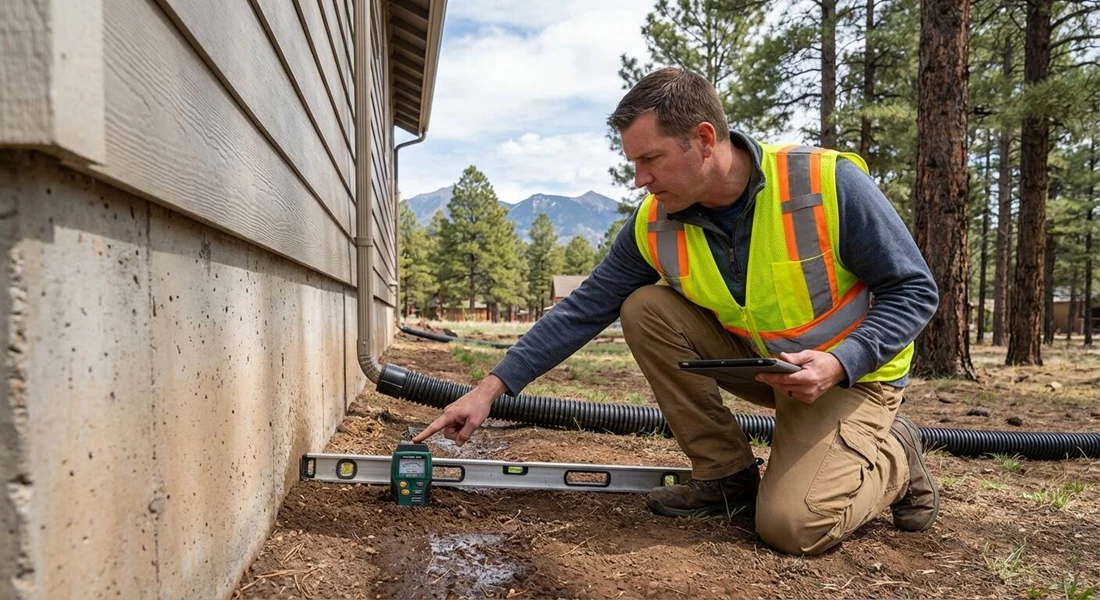
So here's what matters. If you're buying a home where water has nowhere to go, that's a problem waiting to crack your foundation. Every slope should guide runoff away from the structure. Every gutter needs a clear path. And every complete certified home inspection should account for how the land was shaped — not just how the house was built.
Water Finds the Weak Spots
Drainage isn't some abstract concept. It's the system that keeps water from pooling against your foundation, seeping into your crawl space, or turning your yard into a swamp. When the ground doesn't slope correctly, water sits. And when water sits, it works its way into places you don't want it — cracks, joints, basements.
Grading is the angle of the earth around your home. Done right, it pushes water away. Done wrong, it funnels everything straight toward your walls. In Flagstaff, where summer storms dump inches in minutes and winter thaw sends meltwater downhill, bad grading isn't just inconvenient. It's structural.
What We Look For During the Walkthrough
A solid inspection covers the visible, accessible parts of the property. We're not excavating your yard or running ground-penetrating radar, but we are trained to spot the signs that water isn't behaving. That means checking the exterior inspection areas, the foundation, the basement, and the surrounding terrain for anything that screams trouble.
Here's what gets flagged most often:
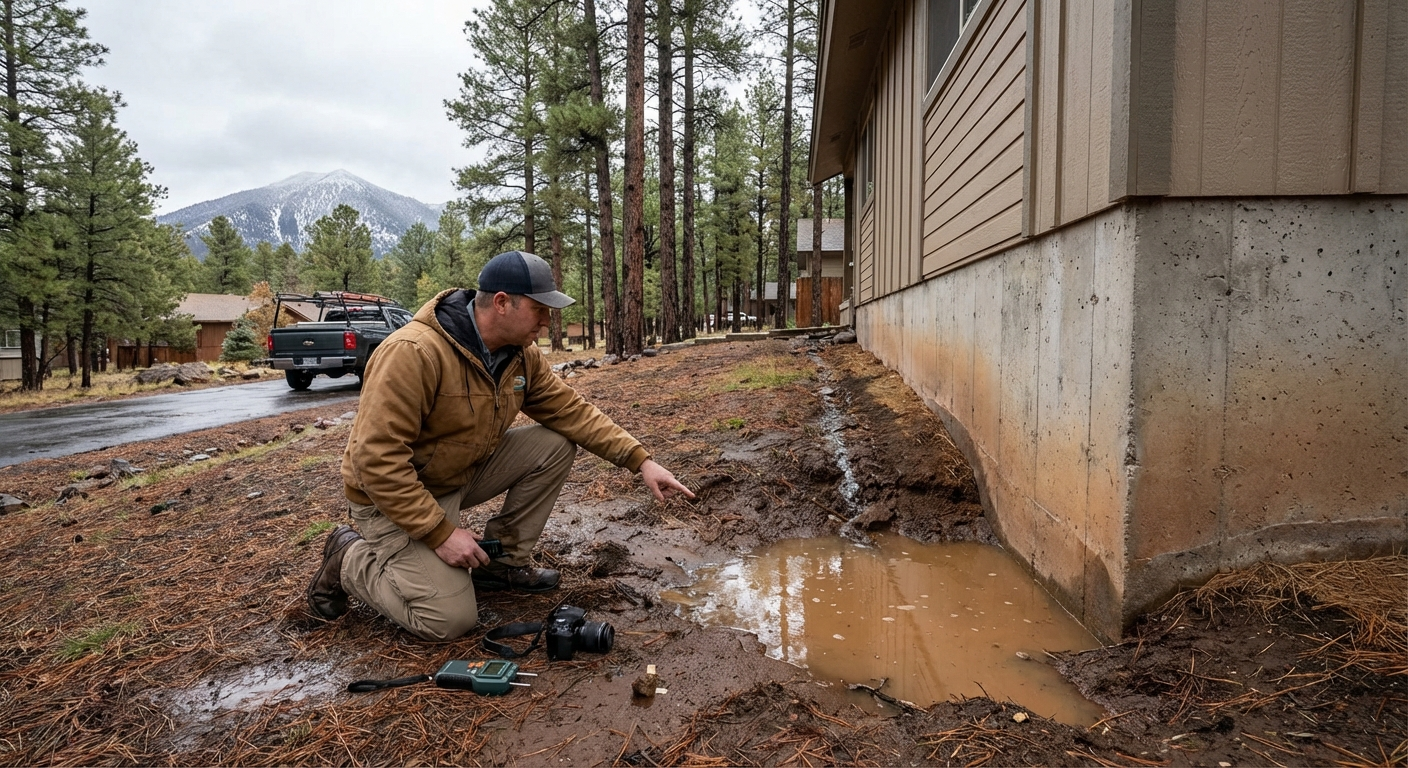
- Puddles or standing water near the foundation after recent rain
- Soil erosion patterns that show where water runs during storms
- Gutters that dump directly next to the house instead of away from it
- Foundation cracks or settling that suggest long-term water pressure
- Moisture stains or efflorescence on basement walls
- Negative grading where the slope tilts toward the structure
We're not engineers, but we know what normal looks like. And when something's off, we document it. If the issue looks serious, we'll recommend bringing in a drainage specialist or a structural inspection professional to dig deeper.
Inspections Have Limits
We can't see through walls or predict what happens underground. If the inspection happens during a dry stretch, there might not be visible water to assess. If landscaping hides the grading, we note what we can and move on. The report reflects what's accessible at the time — not what might show up during the next monsoon.
That said, inspectors who work in Flagstaff regularly know the terrain. We've seen what freeze-thaw cycles do to foundations. We know how fast water moves off volcanic soil. And we understand that a property might look fine in July but flood every March. Experience fills in some of the gaps that timing leaves open.
Why This Matters More in Flagstaff
Elevation and weather make drainage a bigger deal here than in flatter, drier markets. Flagstaff sits at 7,000 feet, where snow piles up and monsoons roll in with force. When that water has to go somewhere, it follows the path of least resistance. If that path leads to your foundation, you're looking at cracks, settling, mold, and worse.
Fixing these problems after the fact isn't cheap. Foundation repairs can run into five figures. Mold remediation isn't far behind. Catching the warning signs early — before you close — gives you leverage to negotiate repairs or walk away clean.
What Happens When We Find Something
If the inspection turns up drainage or grading concerns, don't assume the deal is dead. Most issues have solutions. Some are simple — regrade a section of yard, extend a downspout, add a swale. Others require more work, like installing a French drain or waterproofing the foundation.
Here's how to move forward:
- Get a second opinion from a drainage or foundation specialist
- Request cost estimates for the recommended repairs
- Negotiate with the seller to address the issue or adjust the price
- Factor repair costs into your budget if you're moving ahead
- Prioritize fixes that protect the foundation and prevent water intrusion
The goal isn't to kill the sale. It's to make sure you know what you're buying and what it'll take to keep it dry.
Red Flags We See Too Often
Some properties show obvious signs of neglect. Others hide problems behind fresh landscaping or a recent coat of paint. Either way, there are patterns that come up again and again in Flagstaff inspections.
Watch for these:
- Downspouts that terminate right at the foundation wall
- Flower beds built up against the house, trapping moisture
- Cracked or bowing foundation walls in the basement
- Sump pumps that look like they've been working overtime
- Gutters clogged with pine needles and debris
Each one is a clue. Taken together, they paint a picture of how water has been managed — or ignored — over the years.
When to Bring in a Specialist
If the inspection report mentions drainage concerns, don't try to DIY your way through it. A qualified drainage contractor or geotechnical engineer can assess the severity, recommend solutions, and give you a realistic cost estimate. That's the information you need to make a smart decision.
Specialists can also identify issues that aren't visible during a pre-purchase home inspection, like underground springs, failing drain tiles, or soil composition problems. If you're serious about the property, the extra evaluation is worth it.
Protecting Your Investment from Day One
Buying a home in Flagstaff means understanding how water interacts with the land. A thorough home interior inspection combined with careful exterior evaluation gives you a snapshot of that relationship, but they're not foolproof. The best defense is a combination of a thorough inspection, honest communication with your inspector, and a willingness to dig deeper when something doesn't look right. Water damage doesn't announce itself with fanfare. It shows up quietly, over time, in cracks and stains and soft spots. Catching it early keeps your foundation solid and your investment sound. For professional guidance, contact us to schedule your comprehensive property evaluation.
Let’s Make Sure Your Next Home Stays Dry
We know how important it is to feel confident about your investment, especially in Flagstaff’s unpredictable climate. Let’s work together to spot drainage and grading issues before they become costly headaches. If you’re ready for peace of mind, give us a call at 928-600-7761 or schedule an appointment and let’s protect your future home from the ground up.



.png)